Photo rules, David
Can You Take Photos in the Accademia? Photographing David, the Rules
What you can and cannot shoot inside the Accademia, and the two angles that actually beat the crowd.
 Written with Luca Moretti, Florence Accademia Gallery guide and skip-the-line specialist
Short answer
Yes, photography for personal use is allowed in the Accademia, David included, as long as you skip the flash, tripods, and selfie sticks; commercial shoots need written permission. The least crowded angles are from David's sides under the Tribuna skylight, and the early 8:15 slot is the only time the front is clear.
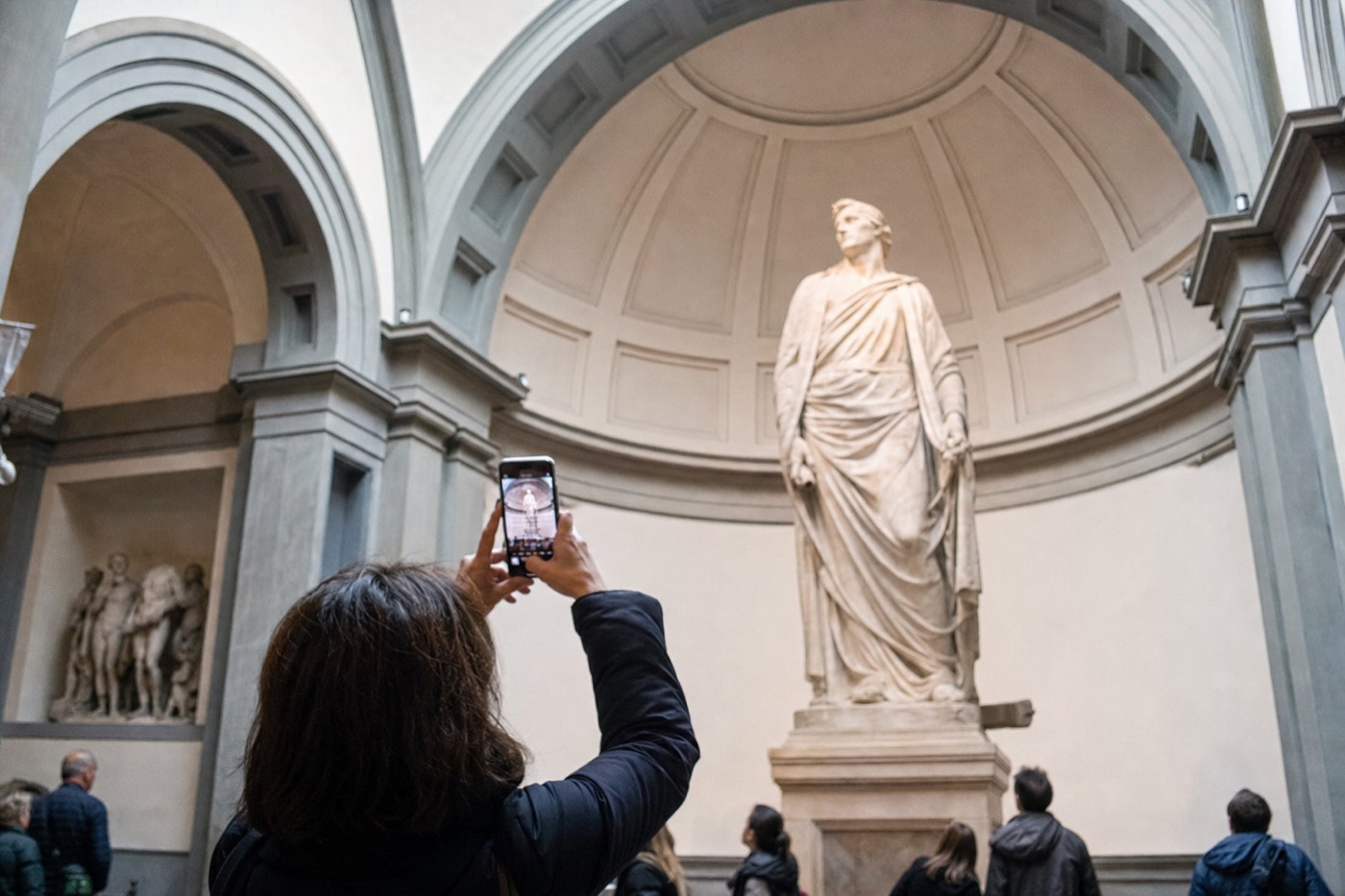
The phones go up the second people round the corner. I watch it every morning: a guest reaches the end of the corridor, sees David under his dome, and the first instinct is not to look but to frame. Nobody stops them, and that surprises visitors who half-expect a guard to wave the camera down. So let me settle the question before you even arrive, because the rules here are simpler and more generous than the rumours suggest, and knowing them changes the kind of photo you walk out with.
Can you take photos in the Accademia, David included?
Yes. Personal, non-commercial photography is allowed throughout the Accademia, Michelangelo's David included, as long as you keep the flash off. Phones and cameras are fine for your own use. The only true bans are flash, tripods, and selfie sticks, plus commercial shoots, which need written permission from the museum.
For years Italy restricted museum photography far more tightly, which is why the myth persists that David is off-limits to cameras. He is not. You can photograph him, the four Prisoners, the Sala del Colosso, all of it, for personal use. The official visit page sets out the practical rules, and the staff enforce the sensible ones: no flash, because repeated light degrades pigment and marble surface over time, and no gear that blocks a crowded room. What they do not do is stop you lifting a phone. So the real question is not whether you can shoot David, it is how to get a frame that is not full of other people's heads, which comes down entirely to when you arrive and where you stand.
What are the exact photography rules inside?
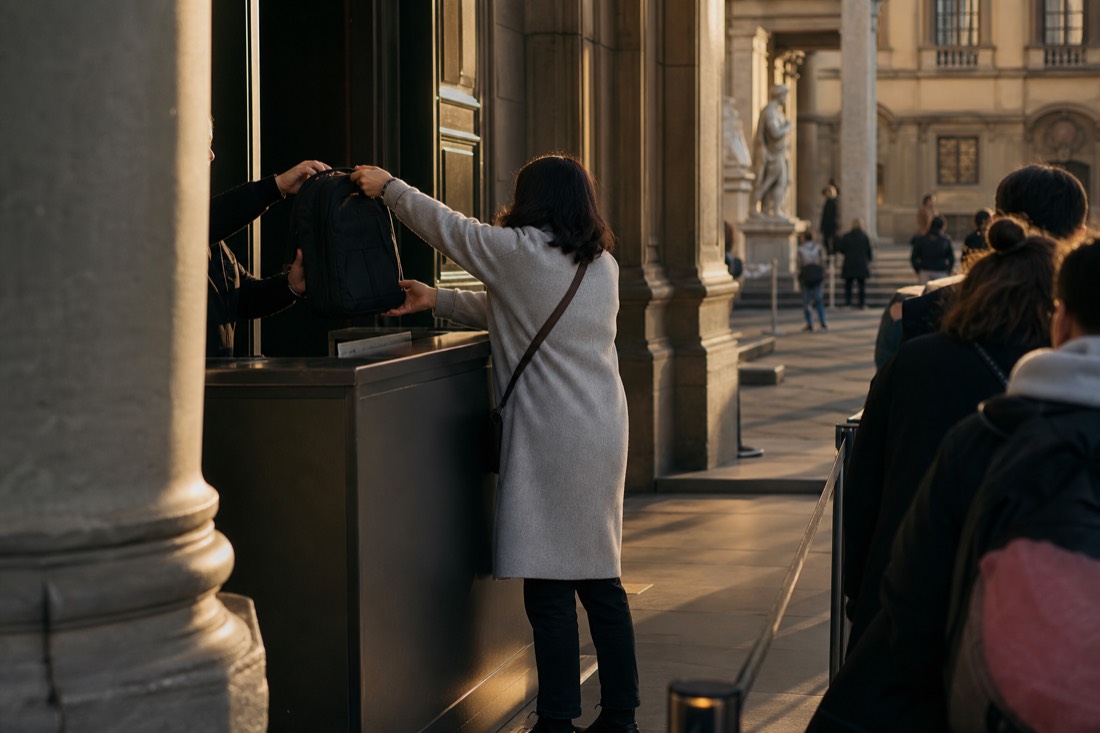
Personal photos and video are allowed with no flash. Tripods, monopods, and extendable selfie sticks are prohibited, both to protect the works and to keep narrow rooms clear. Commercial or professional photography requires prior written authorization from the museum. Arrange external storage for large bags before arriving; the museum does not provide a cloakroom.
The list of what is and is not allowed is short enough to memorise.
| What | Allowed? | Note |
|---|---|---|
| Phone or camera, personal use | Yes | David and every room included |
| Flash | No | Banned everywhere, protects the works |
| Tripod or monopod | No | Blocks narrow, crowded rooms |
| Selfie stick, extendable | No | Not permitted inside |
| Video for personal use | Yes | Same no-flash rule applies |
| Commercial or professional shoot | Permission | Prior written authorization required |
Two of those overlap with the general entry rules, so plan for them before you reach the door. Arrange external storage for large bags before arriving; the museum does not provide a cloakroom. None of this is unusual for an Italian state museum, but the no-flash rule is the one people break by accident: check that your phone's auto-flash is off before you walk in, because a single pop draws a guard faster than anything else.
When should you go for a clear, uncrowded shot of David?
Go at the 8:15 opening. It is the only slot where the space in front of David is genuinely clear, giving you a clean full-length frame before the tour groups arrive. After roughly 10 am the tribune fills and stays busy until late afternoon, when it eases again. A timed entry ticket is what makes the early slot possible.
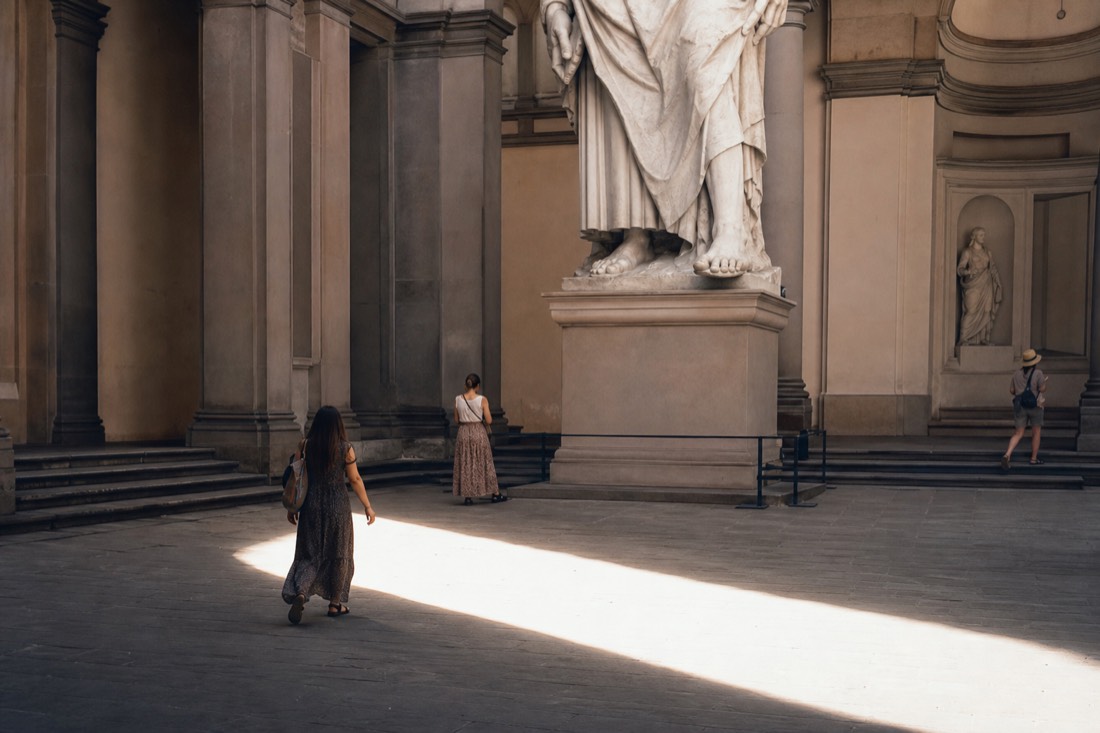
The photograph you imagine, David alone under his shaft of light, exists for about forty minutes a day. Check the times offered for your date; neither availability nor a quiet room is guaranteed. By mid-morning the group tours land, and from then until roughly 4 pm the space in front of the statue is a wall of phones. Here is the pattern I see day after day.
| Time slot | Crowd at the tribune | Photo verdict |
|---|---|---|
| 8:15 opening | Nearly empty | The clear front shot, best light |
| 9:30-10:00 | Filling fast | Still workable from the sides |
| 10:00-15:30 | Packed, group tours | Detail and angle shots only |
| After 16:00 | Easing again | Second-best window of the day |
That early slot only works if you hold a timed reservation, because the walk-up line in season swallows the first hour. If you would rather weigh the official desk against the operator first, official versus third-party tickets compares what each includes, and the wider timing logic lives in the best time to visit.
Where are the best angles to photograph David?
The strongest shots are from David's sides, not the crowded front. The right profile catches the tension in his brow and the sling over his shoulder; the left is cleaner and calmer. Detail frames of the oversized right hand read beautifully. The full-length front shot needs the empty early slot to work at all.
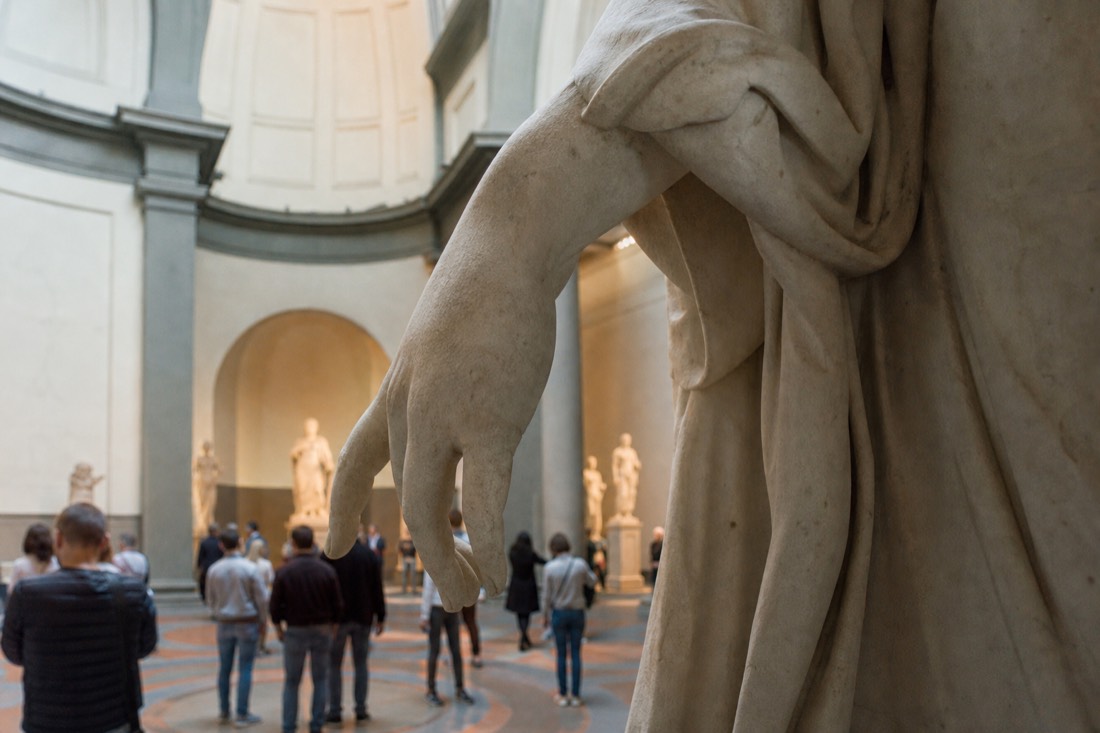
David was carved to be read from below, which is why his head and right hand are deliberately oversized, a scale question I unpack in how tall David really is. That same design gives you your best photos. Shoot up from the sides and the proportions look heroic rather than odd. The right profile, taken from a step or two toward the Prisoners' corridor, catches the famous frown and the tendons in the neck. The left side is usually less mobbed and gives a calmer full figure. And the details reward a phone: the veined right hand, the coiled sling, the turn of the wrist.
| Where you stand | What the frame gives you | Crowd |
|---|---|---|
| Front, centre | The classic full-length pose | Clear only at 8:15 |
| Right profile | The frown, the neck tendons, the sling | Usually open |
| Left side | A calmer, cleaner full figure | Least mobbed |
| Close on the hand | The oversized, veined right hand | Crowd-proof detail |
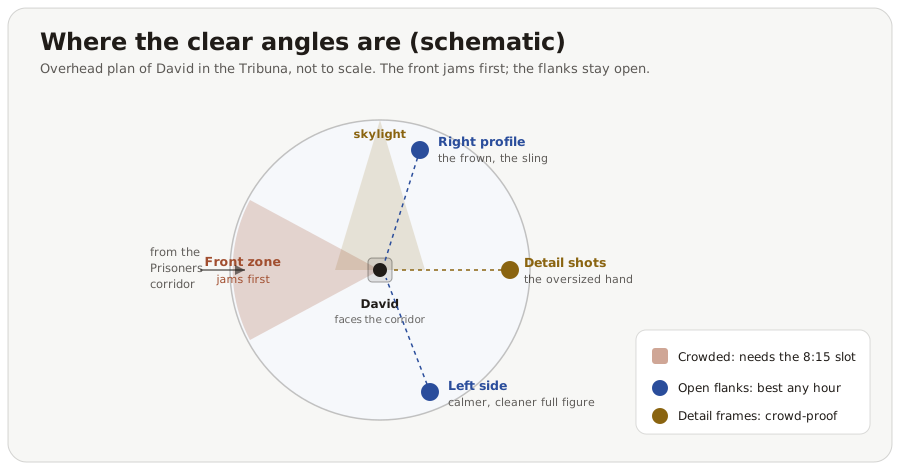
The Tribuna's skylight does the lighting for you, so no flash is any real loss. One practical note from the floor: the low barrier and the bench behind the statue mark how close you can get, and a phone at chest height from the right flank clears most heads even at a busy hour.
Quick questions
Can you take pictures of the statue of David?
Yes. Personal, non-commercial photos of David are allowed inside the Accademia with no flash. Phones and cameras are fine. Tripods and selfie sticks are not, and any commercial shoot needs written permission from the museum first.
Is flash allowed at the Accademia?
No. Flash is prohibited throughout the museum to protect the marble and pigments. The skylight over David gives even natural light, so you lose nothing by turning it off. Check your phone's auto-flash is disabled before you go in.
Can you use a tripod or selfie stick near David?
No to both. Tripods, monopods, and extendable selfie sticks are banned inside, partly for the works and partly to keep narrow rooms clear. Arrange external storage for large bags before arriving; the museum does not provide a cloakroom. Handheld at chest height works best anyway.
What is the best time to photograph David without crowds?
The 8:15 opening slot. For about forty minutes the space in front of the statue is clear and the skylight is soft. After 10 am it stays busy until roughly 4 pm, when it eases into a decent second window. A timed ticket gets you in at opening.
Your Next Step
Check Your Florence Date
Accademia Timed Entry
Have your travel date in mind? Explore David, the Prisoners and the other permanent rooms at your own pace. Check the start and meeting details before arranging your next stop.
60 minutes suggested; allow extra time for security. Meet at Via Ricasoli 45 blue, 15 minutes early; bring matching ID for every visitor. No live guide or luggage storage.
Initial editorial suggestion. Confirm the option, party requirements and final total before paying.
Scheduled departures load automatically. Final availability and price are confirmed on Viator.
A scheduled start is not a confirmed place. Your date is a planning aid; select it again on Viator.
No verified option fits those choices. Adjust the controls or reset to the general suggestions.
Compare Options And Fit This To Your Visit
Accademia Timed Entry: Explore David, the Prisoners and the other permanent rooms at your own pace. 60 minutes suggested; allow extra time for security. Meet at Via Ricasoli 45 blue, 15 minutes early; bring matching ID for every visitor. No live guide or luggage storage.
Accademia With An English Guide: See David with an English-speaking guide, then stay inside to explore independently. 65 minutes; admission and headsets included. Meet at Via Ricasoli 39, 15 minutes early. No hotel pickup, meals or luggage storage.
Accademia Entry And Audio Options: Choose an independent visit with a phone audio guide, or select a licensed guided option. About 1 hour. Permanent exhibitions included. Audio and guided inclusions depend on the option selected. Bring ID, a charged phone and headphones; arrive 10–15 minutes early at the option’s meeting point. Large bags prohibited.
Private Accademia Art Tour: Discuss David and the unfinished sculptures with your own art historian guide. 2 hours; admission included. Selected central hotels offer walking pickup, not a car transfer. Confirm your exact hotel or meeting point with the operator.
Affiliate links may earn us a commission at no extra cost to you. Booking is completed with the provider.