Which option wins
Guided Tour vs Audio Guide vs Skip-the-Line: Which Accademia Option Is Worth It?
A guide's honest take on when narration earns its price at the Accademia, and when a plain ticket is all you need.
 Written with Luca Moretti, Florence Accademia Gallery guide and skip-the-line specialist
Short answer
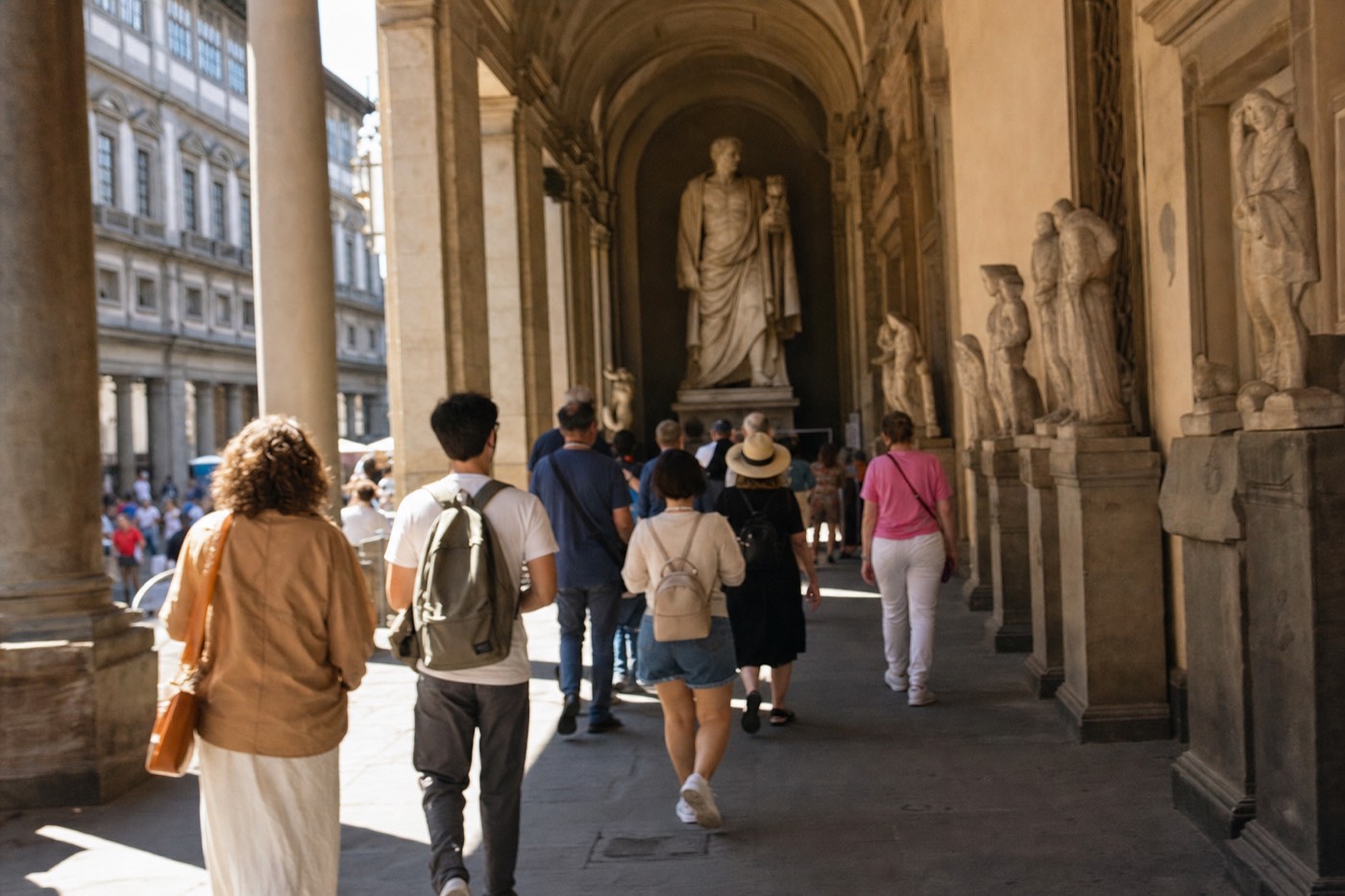
For most visitors a skip-the-line entry ticket is enough; the Accademia is small and David needs no narration to move you. The museum's own audio guide costs 6 EUR and adds context cheaply. A guided tour is worth it if you want the stories behind the Prisoners and the Renaissance rooms or you dislike reading labels; a private tour suits families and art lovers who want it tailored.
The question lands almost every time I hand back change for the audio guide desk directions. Someone has booked their Florence days down to the half-hour, and now they are stuck on the Accademia: pay for a guide, rent the headset, or just walk in and look. I have taken more than a thousand people through these rooms since 2022, and I have also watched hundreds do it perfectly well without me. So here is the version I give friends, not the version that sells the most tours. The right answer depends less on money than on how you like to meet art.
Do you actually need a guided tour to visit the Accademia?
No, not for most people. The Accademia is a small museum built around one overwhelming object, and David needs no narration to land. A timed skip-the-line ticket that gets you past the queue is enough for a satisfying visit. A guide adds stories and pacing, not access, so it is a want rather than a need.
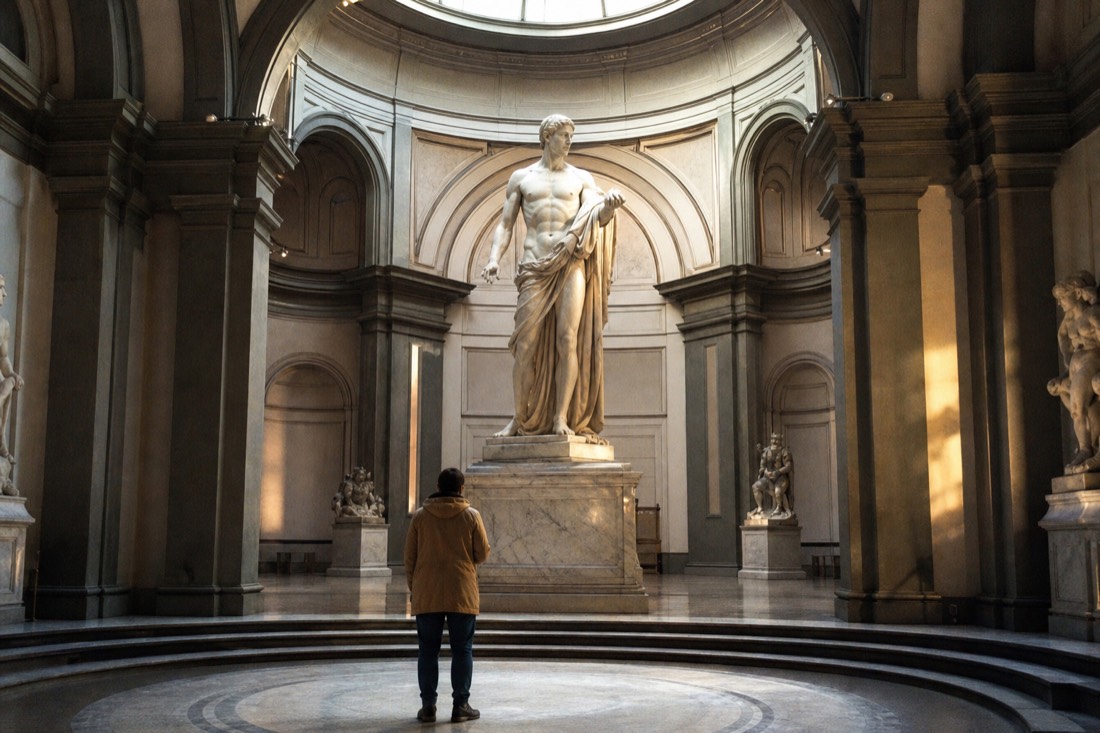
Start by separating two things people blur together: getting in, and understanding what you see. Every paid option here, from a 6 EUR headset to a private art historian, sits on top of the same entry. What you are really choosing is how much interpretation to buy. And the museum is compact enough, essentially one great corridor of Prisoners leading to David under his dome, that you cannot get lost or miss the point. That is why I tell rushed travellers the honest thing: the single decision that changes your visit most is not the tour, it is the timed slot. If David matters to you at all, and my honest verdict on whether the Accademia is worth it argues he should, secure the entry first and layer narration second.
That is also the cheapest route. Here is the full menu at a glance, so you can see what each layer costs before we go deeper.
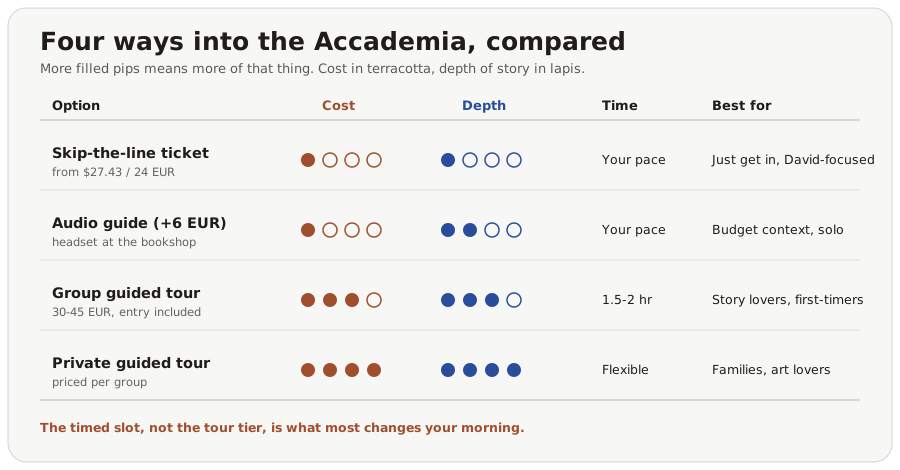
| Option | What it costs | What it adds |
|---|---|---|
| Skip-the-line entry ticket | Current provider price, or 24 EUR official reserved | Timed entry past the queue, self-paced, no narration |
| Museum audio guide | 6 EUR on top of entry | Recorded commentary at your own pace, several languages |
| Group guided tour | Commonly 30-45 EUR per person, entry included | A live guide, the stories, a set 1.5-2 hour pace |
| Private guided tour | Priced per group, higher per head | A guide to yourself, tailored to your questions |
What does the Accademia audio guide cost, and is it worth it?
The museum's official audio guide costs 6 EUR, rented at the bookshop with an ID left as deposit, in several languages including adult and children's versions. It is the cheapest way to add real context. You get recorded commentary on the key works at your own pace, without a guide's stories or the ability to ask a question.
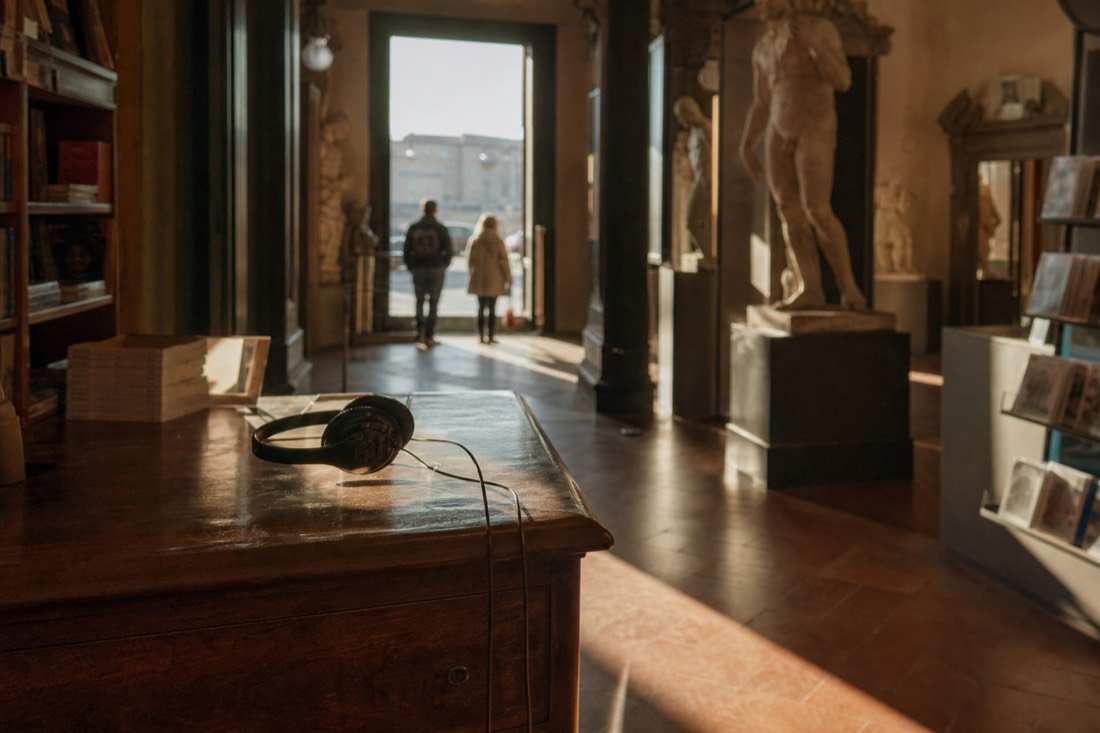
For six euro, this is the option I most often nudge undecided visitors toward. You pick it up at the bookshop, the desk holds an ID until you return it, and you set your own rhythm through David, the Prisoners, and the Sala del Colosso. The official visit page lists it alongside the practical details, and the price has held at 6 EUR. What it buys is a floor of understanding: who the Prisoners were carved for, why David's head is oversized, when the statue arrived. What it cannot do is read your face and slow down when you are lost, or answer the question that occurs to you at the tribune.
Set against a live guide, the trade is straightforward.
| Audio guide (6 EUR) | Live guide | |
|---|---|---|
| Depth | Fixed script on the main works | As deep as your questions go |
| Pace | Entirely yours, pause any time | The group's, roughly 1.5-2 hours |
| Questions | None | Yes, in real time |
| Best for | Independent visitors on a budget | People who learn by listening and asking |
One honest caveat: the recorded track covers the headline pieces, not every altarpiece. If you are the sort who reads every wall label anyway, the 6 EUR guide is money very well spent. If you find recorded voices flattening, save it and read up beforehand instead.
When is a group guided tour actually worth paying for?
A guided tour is worth it when you want the stories behind the Prisoners and the Renaissance rooms, when you dislike reading labels, or when hearing it live simply makes art stick better for you. Group tours commonly run 30 to 45 EUR per person for about 1.5 to 2 hours, skip-the-line entry included, so you are paying roughly 20 EUR over a plain ticket for the narration.
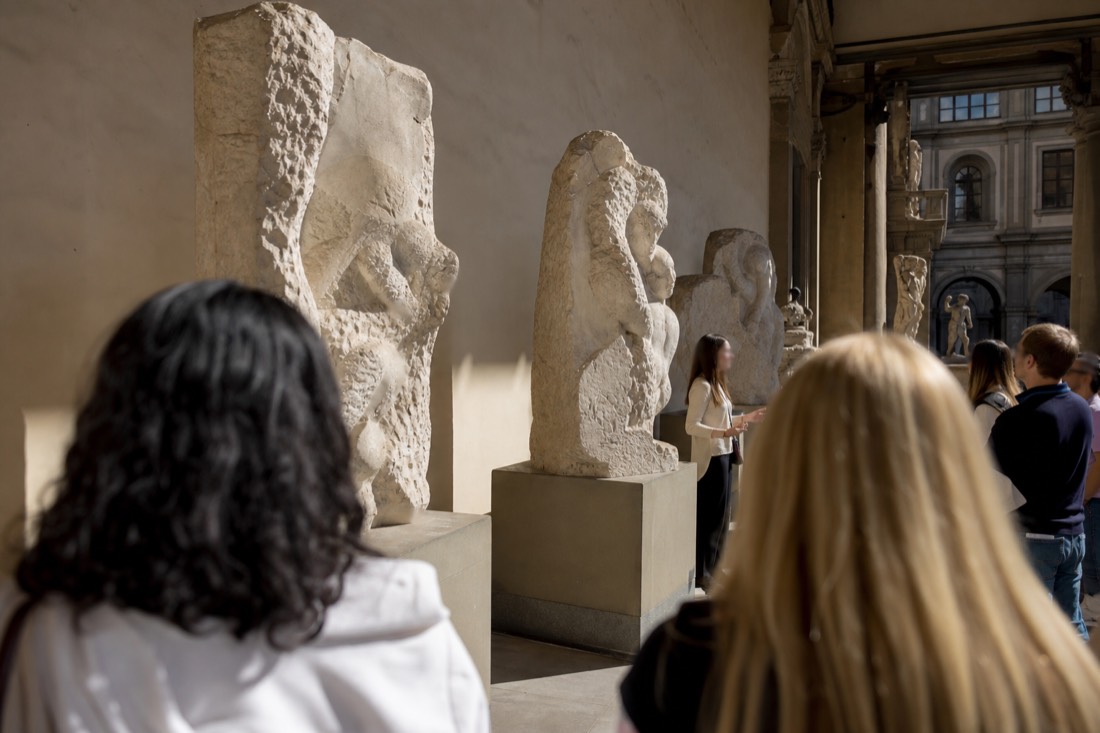
Here is where the money starts to make sense for the right person. A good guide does three things a headset cannot. They connect the rooms into a single argument, so the Prisoners stop being rough blocks and become Michelangelo's thinking made visible on the way to a pope's tomb. They answer the odd question, the one about the marble's flaw or the sling over David's shoulder. And they set a pace, which matters more than people expect: left alone, plenty of visitors give David four rushed minutes and miss him entirely. The stories that reward this treatment are the same ones I unpack in what to see besides David, and the deeper history of the statue itself sits in my full David guide.
The cost math is honest and simple. A plain reserved entry runs about 24 EUR official, or a variable provider price through the operator with services attached. A group tour commonly lands at 30 to 45 EUR per person with entry folded in. So you are spending on the order of 20 EUR extra for a live art historian and a shaped 90 minutes. For a first Florence visit built around David, plenty of people find that worth it. When you want that route, you can check the guided tour and its times here. If you would rather compare what the official desk and the operator each include before you spend, official versus third-party tickets lays it out.
Is a private tour worth the extra for families and art lovers?
A private tour is worth it when you want the visit tailored: to a child's attention span, to a specific interest like unfinished sculpture, or to your own pace. It is the priciest option, quoted per group rather than per head, so it works out better for families and small parties than for solo travellers. You trade money for a guide who is entirely yours.
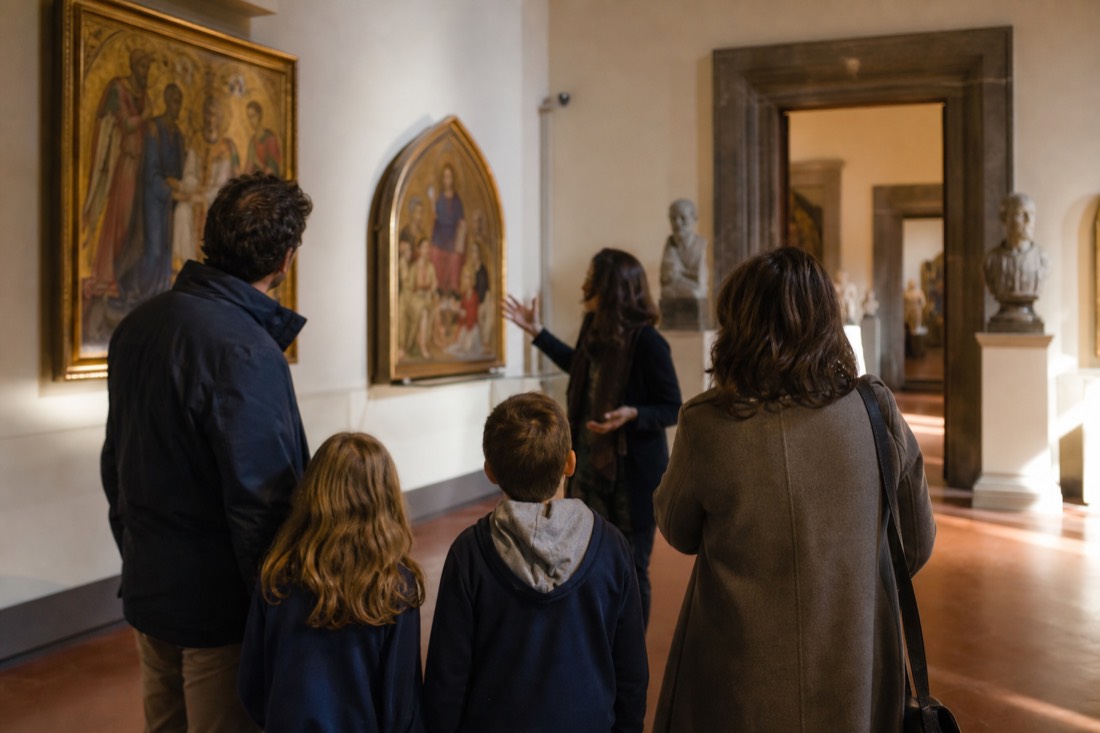
The private option is the one I am most careful about recommending, because value depends entirely on the party. For a family, a private guide is often the best six-year-old survival tool in Florence: the pace bends to the child, the stories turn into a hunt for the giant and the "unfinished men," and nobody melts down waiting for a group to reassemble. If you are travelling with kids, the practical rhythm in visiting the Accademia with children pairs well with a private booking. For two art lovers who want to spend forty minutes on the Prisoners alone, a private guide follows your obsession instead of the standard script.
For a solo traveller, though, the per-group pricing rarely pencils out against a group tour or the 6 EUR headset. Below is the way I sort visitors when they ask me straight.
| You are | I usually suggest |
|---|---|
| A budget solo visitor | Skip-the-line ticket, add the 6 EUR audio guide |
| A first-timer who loves a story | A group guided tour |
| A family with young children | A private tour, or at least a guide, for the pacing |
| An art lover chasing one theme | Private, to spend your time where you want it |
| Short on time, David-focused | Skip-the-line entry, straight to the tribune |
What do most first-time visitors end up choosing?
Most first-timers do well with a skip-the-line ticket plus the 6 EUR audio guide: past the queue, context on the main works, and total freedom of pace for under 30 EUR all in. Those who love hearing history live upgrade to a group tour; families and art lovers who want it tailored go private. Almost nobody regrets simply getting in early.
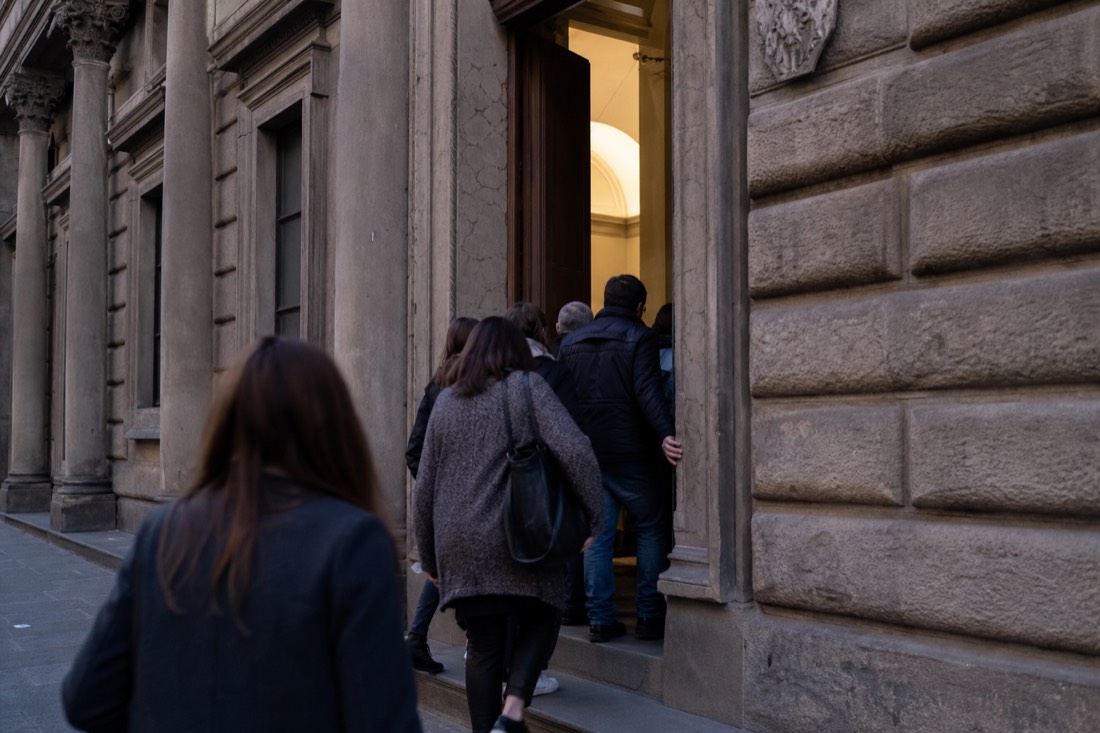
When I zoom out across a thousand-plus visits, the pattern is clear. The single biggest driver of a good morning is not the tour tier, it is the timing: an 8:15 or late-afternoon slot in a half-empty tribune beats a noon guided tour in a crowd every time. The official tickets page will sell you a reduced 2 EUR entry if you are an EU citizen aged 18 to 25, and free entry under 18, which changes the audio-guide math even further in the cheap direction. So my real advice folds the whole decision into one move: book a good early slot, add the headset if six euro of context appeals, and only reach for a guide when you know you learn best by listening and asking. The stories will still be there whichever door you pick.
How much does each option really cost once every fee is added?
The door price is 20 EUR flat. Add the 4 EUR reservation fee and official timed entry comes to 24 EUR, while the operator route has a variable provider price with services attached. The 6 EUR headset or a 30 to 45 EUR group tour then layers on top of whichever entry you choose. The narration, not the ticket, is where the spend really moves.

The museum publishes its tariff in euros. Booking platforms can display a different currency based on your settings. Compare both complete totals in the same currency, including reservation fees and any card conversion charge; the reseller markup is not fixed.
Reduced and free entry bend the math further. An EU citizen aged 18 to 25 pays 2 EUR for the entry itself, which makes the 6 EUR audio guide the largest line on their receipt rather than the smallest. Under-18s enter free. Treat any single figure below as a planning allowance rather than a fixed quote, because fees and exchange rates drift.
| Route | Base entry | Added on top | You pay in | All-in |
|---|---|---|---|---|
| Door, walk-up | 20 EUR | Nothing | Euro at the counter | 20 EUR |
| Official B-Ticket online | 20 EUR | 4 EUR reservation | Euro online | 24 EUR |
| Operator timed entry | Current provider price | Pickup, luggage storage | Dollars, card-converted | Current provider price |
| Add the museum audio guide | Any entry above | 6 EUR, ID as deposit | Euro at the bookshop | + 6 EUR |
| Add a group guided tour | Entry included | 30 to 45 EUR total | Euro | 30 to 45 EUR |
| Reduced EU 18-25 entry | 2 EUR | 4 EUR only if reserved | Euro | 2 to 6 EUR |
Which option do I tell guests to skip?
In the groups I guide, the option I most often talk people out of is a private tour for a lone traveller, and a full group tour for anyone on a tight half-day. The one I almost never let them drop is the timed slot itself. Skip the narration if your budget or schedule is tight. Do not skip the reservation.
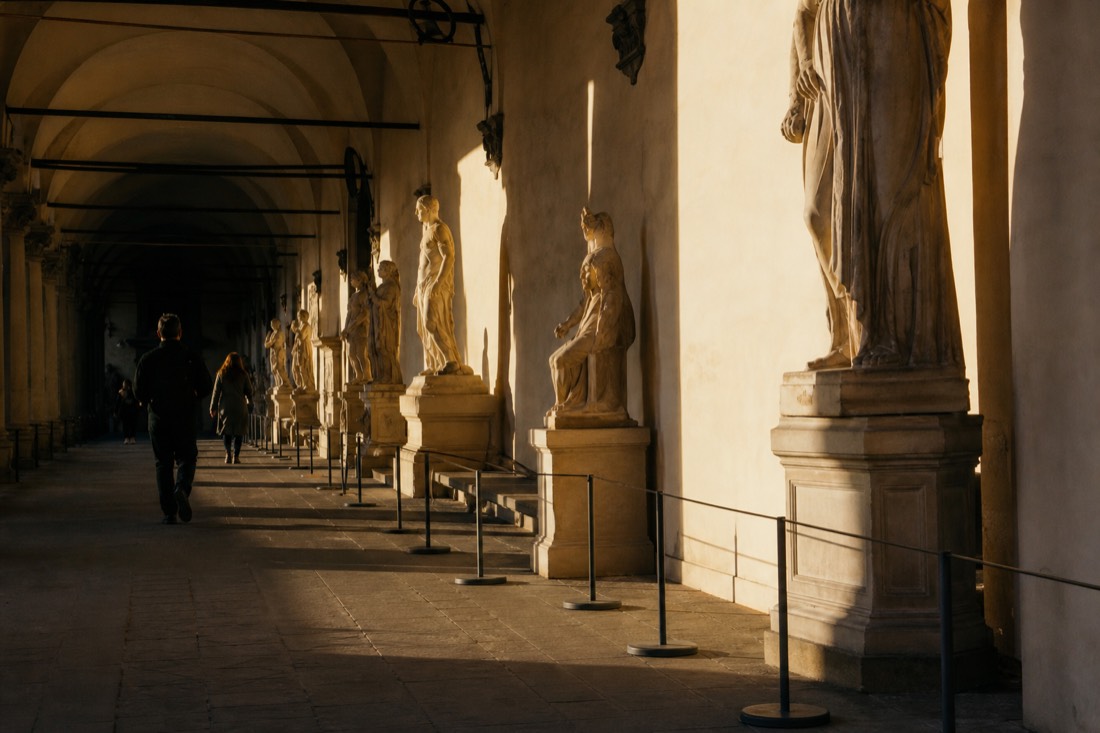
After four years of handing back change at that audio desk, the mistakes cluster. A solo traveller books a private guide because it sounds like the best version, then pays group-of-four money to stand alone. A couple with a single afternoon books the full 90-minute tour, then spends the back half glancing at the clock because the Uffizi slot is looming. Both would have been happier one tier down.
The reverse mistake is quieter and more common: skipping the timed slot to save the 4 EUR fee, then losing an hour or two in the walk-up line. That trade almost never works out in season. If something in your plan has to give, let it be the guiding, which you can add later or replace with the 6 EUR headset. Here is how I sort it when guests ask me straight.
| You are | What I'd skip | Why |
|---|---|---|
| Solo and watching the budget | The private tour | Per-group pricing rarely pencils out for one |
| Down to a tight half-day | The full group tour | 90 fixed minutes you may not spare, take the headset |
| With a restless teenager | The audio guide | A headset loses them, a live guide holds them |
| Deep into one artist or theme | The group tour | Its set script will not linger where you want |
| Anyone, any budget | Never the timed slot | It is the one thing that buys the quiet room |
Can you combine the Accademia with the Uffizi or Bargello?
Not on a single ticket with the Uffizi, which is sold separately from 25 EUR. Since 15 March 2026 the Accademia shares one ticketing institute with the Bargello: a 48-hour combo covers both for 26 EUR, and a 72-hour pass adds four more museums for 38 EUR. A guide can bridge two sites in a day, but each entry is booked on its own slot.
This changed recently, so older advice online is out of date. As of 15 March 2026 the Accademia and the Bargello sit under one ticketing institute, which means two combined passes now exist that did not before. The 48-hour combo at 26 EUR is the one most David-and-sculpture visitors want, since the Bargello holds Donatello's bronze David and Michelangelo's Bacchus a short walk away. The 72-hour pass at 38 EUR stretches to six museums for anyone staying longer.
The Uffizi sits outside all of this. Its ticketing is separate, from 25 EUR same-day or 29 EUR booked ahead, so a David-and-Uffizi day means two bookings, not one pass. The older Firenze Card at 85 EUR for 72 hours does include the Accademia across dozens of sites, but it still needs a free reservation for entry and does not skip the line, so it suits long culture-heavy trips rather than a quick two-museum morning.
| Pass | Covers | Valid | Price |
|---|---|---|---|
| Single Accademia | Accademia only | One slot | 20 EUR door, 24 reserved |
| Accademia + Bargello combo | Two museums | 48 hours | 26 EUR |
| Six-museum pass | Accademia, Bargello and four more | 72 hours | 38 EUR |
| Firenze Card | 60+ sites including the Accademia | 72 hours | 85 EUR, reservation still needed |
| Uffizi, booked separately | Uffizi only | Same-day or advance | 25 or 29 EUR |
Quick questions
Do I need a guide to skip the line at the Accademia?
No. Skipping the line comes from a timed reservation, not a guide. A plain skip-the-line ticket, an audio guide add-on, and a guided tour all include reserved entry. You only pay a guide for interpretation, never for access.
How much is the audio guide at the Accademia?
Six euro, rented at the museum bookshop with an ID left as a deposit. There are adult and children's versions in several languages. It covers the main works, David and the Prisoners included, at your own pace.
Is a guided tour of the Accademia worth the extra cost?
It is if you dislike reading labels or learn best by listening. Group tours commonly run 30 to 45 EUR per person for 1.5 to 2 hours with entry included, roughly 20 EUR over a plain ticket. For a first David-focused visit, many find that fair.
Audio guide or guided tour for a family with kids?
For young children, a live guide, ideally a private one, usually wins. The pace bends to the child and the works turn into a story. Under-18s enter free, so you are mainly paying for the guiding, not extra tickets.
Your Next Step
Check Your Florence Date
Accademia Timed Entry
Have your travel date in mind? Explore David, the Prisoners and the other permanent rooms at your own pace. Check the start and meeting details before arranging your next stop.
60 minutes suggested; allow extra time for security. Meet at Via Ricasoli 45 blue, 15 minutes early; bring matching ID for every visitor. No live guide or luggage storage.
Initial editorial suggestion. Confirm the option, party requirements and final total before paying.
Scheduled departures load automatically. Final availability and price are confirmed on Viator.
A scheduled start is not a confirmed place. Your date is a planning aid; select it again on Viator.
No verified option fits those choices. Adjust the controls or reset to the general suggestions.
Compare Options And Fit This To Your Visit
Accademia Timed Entry: Explore David, the Prisoners and the other permanent rooms at your own pace. 60 minutes suggested; allow extra time for security. Meet at Via Ricasoli 45 blue, 15 minutes early; bring matching ID for every visitor. No live guide or luggage storage.
Accademia Entry And Audio Options: Choose an independent visit with a phone audio guide, or select a licensed guided option. About 1 hour. Permanent exhibitions included. Audio and guided inclusions depend on the option selected. Bring ID, a charged phone and headphones; arrive 10–15 minutes early at the option’s meeting point. Large bags prohibited.
Accademia With An English Guide: See David with an English-speaking guide, then stay inside to explore independently. 65 minutes; admission and headsets included. Meet at Via Ricasoli 39, 15 minutes early. No hotel pickup, meals or luggage storage.
Private Accademia Art Tour: Discuss David and the unfinished sculptures with your own art historian guide. 2 hours; admission included. Selected central hotels offer walking pickup, not a car transfer. Confirm your exact hotel or meeting point with the operator.
Private Florence With Both Galleries: Visit David, the Uffizi and central Florence on one guided itinerary. 6 hours; both gallery admissions and guide included. Meet and finish at Neptune fountain in Piazza della Signoria. Lunch and hotel pickup excluded.
Affiliate links may earn us a commission at no extra cost to you. Booking is completed with the provider.